UC Irvine BME Senior Design

Earicular

Restoring Ears. Restoring Childhoods.

Earicular is a tissue-engineered reconstruction project to restore natural ear shape for patients with congenital deformities.

Learn More
Our Product

Engineering a path to natural ear restoration

Earicular combines clinical insight, allograft tissue, and 3D bioprinting to address microtia in a way that's gentler on patients.

Clinical Need

Microtia is a congenital condition in which the outer ear is underdeveloped or absent due to abnormal fetal ear formation.

Reconstructive surgery is typically delayed until later childhood or early adolescence, when rib cartilage is fully developed and large enough to harvest.

1-10 per 10,000 births
Higher rates in Hispanic, Indigenous, Asian & Pacific Islander populations

Extearna®

Cartilage allografts are increasingly used in reconstructive surgery with strong clinical outcomes.

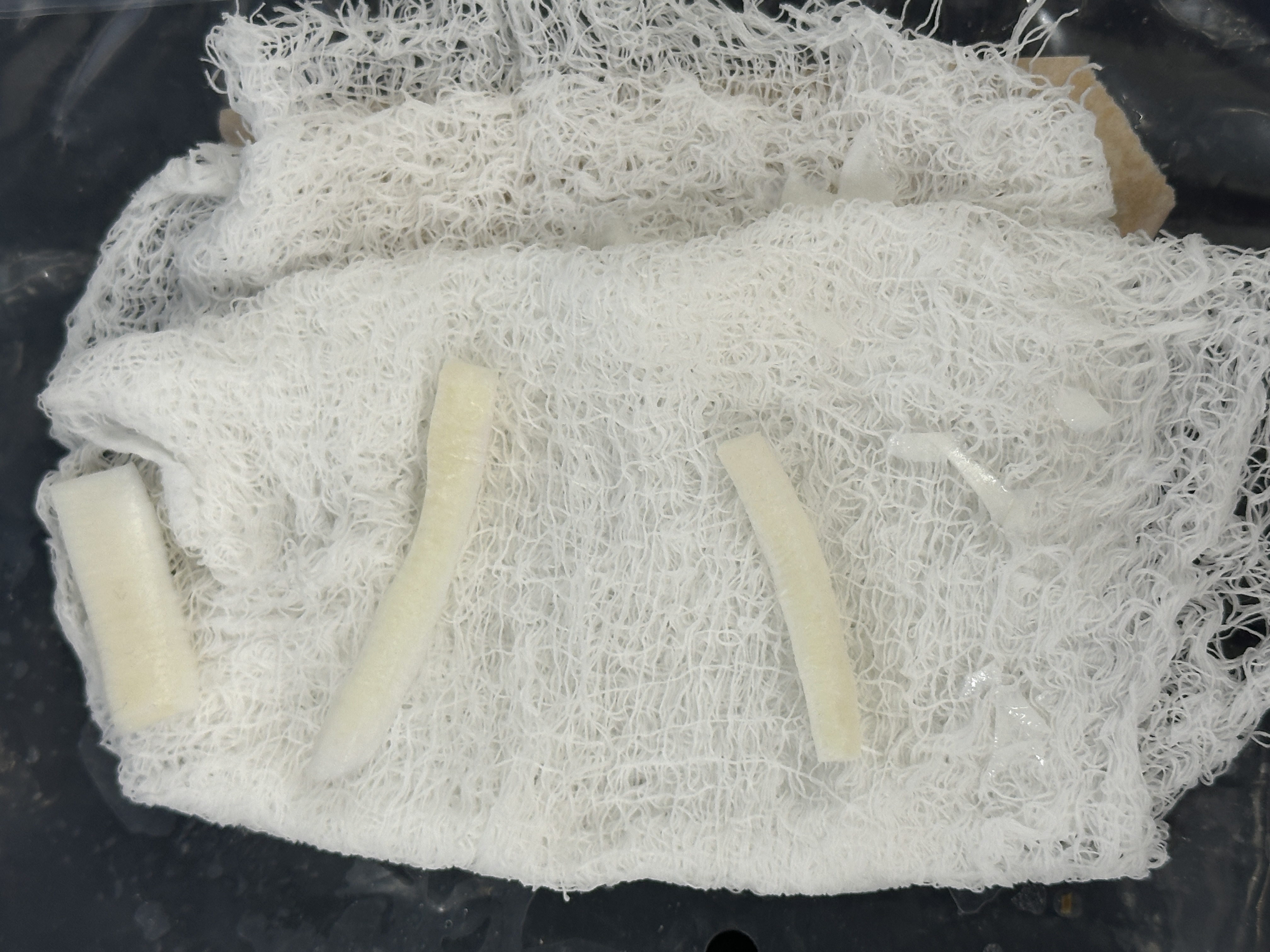
Extearna® is a minimally processed costal cartilage allograft sourced from pediatric and young adult donors, a promising material for auricular reconstruction.

Visit MTF Biologics →

Our Solution

Earicular's goal is to develop 3D bioprinted auricular constructs using Extearna® that match the biomechanical, biochemical, and clinical performance of autologous costal cartilage.

The result: fewer surgeries, reduced operative time, and a smoother experience for pediatric patients.

Extearna costal cartilage allograft
Featured Material

Why Extearna®?

Costal cartilage allografts from young donors retain native ECM cues that support remodeling and integration. Pairing Extearna® with bioprinting lets us deliver patient-specific ear geometry without the morbidity of harvesting a child's own rib.

Surgery, sooner.

By eliminating the wait for a child's rib to mature, we can shift reconstruction toward the years when it matters most: before peers, photographs, and self-image.

Our Research

Bioink, biology, and timing

Four pillars of research drive Earicular's approach to a softer, earlier reconstruction.

Bioink Component

GelMA

A photocrosslinkable hydrogel that's biocompatible and mechanically tunable, with support for cell adhesion. Derived from collagen-based gelatin, GelMA breaks down into harmless amino acids as native tissue takes over.

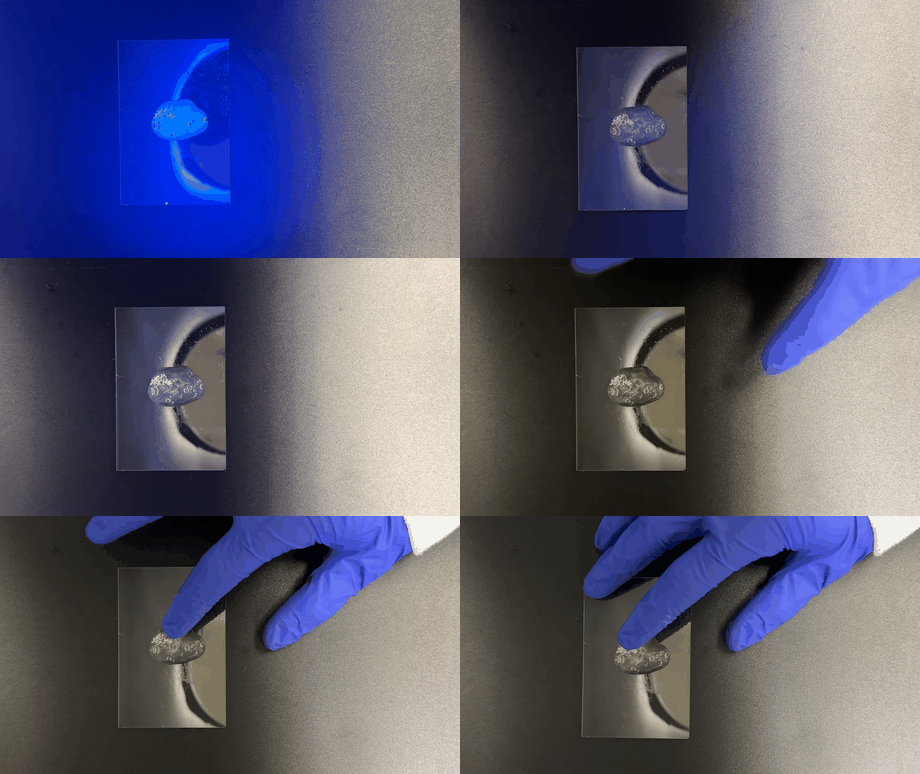
Bioink extrusion test
Composite Bioink

dECM Composite Bioink

We incorporate decellularized costal cartilage ECM particles into the GelMA matrix. This composite bioink carries the biochemical cues of native cartilage, then gets bioprinted into auricular constructs.

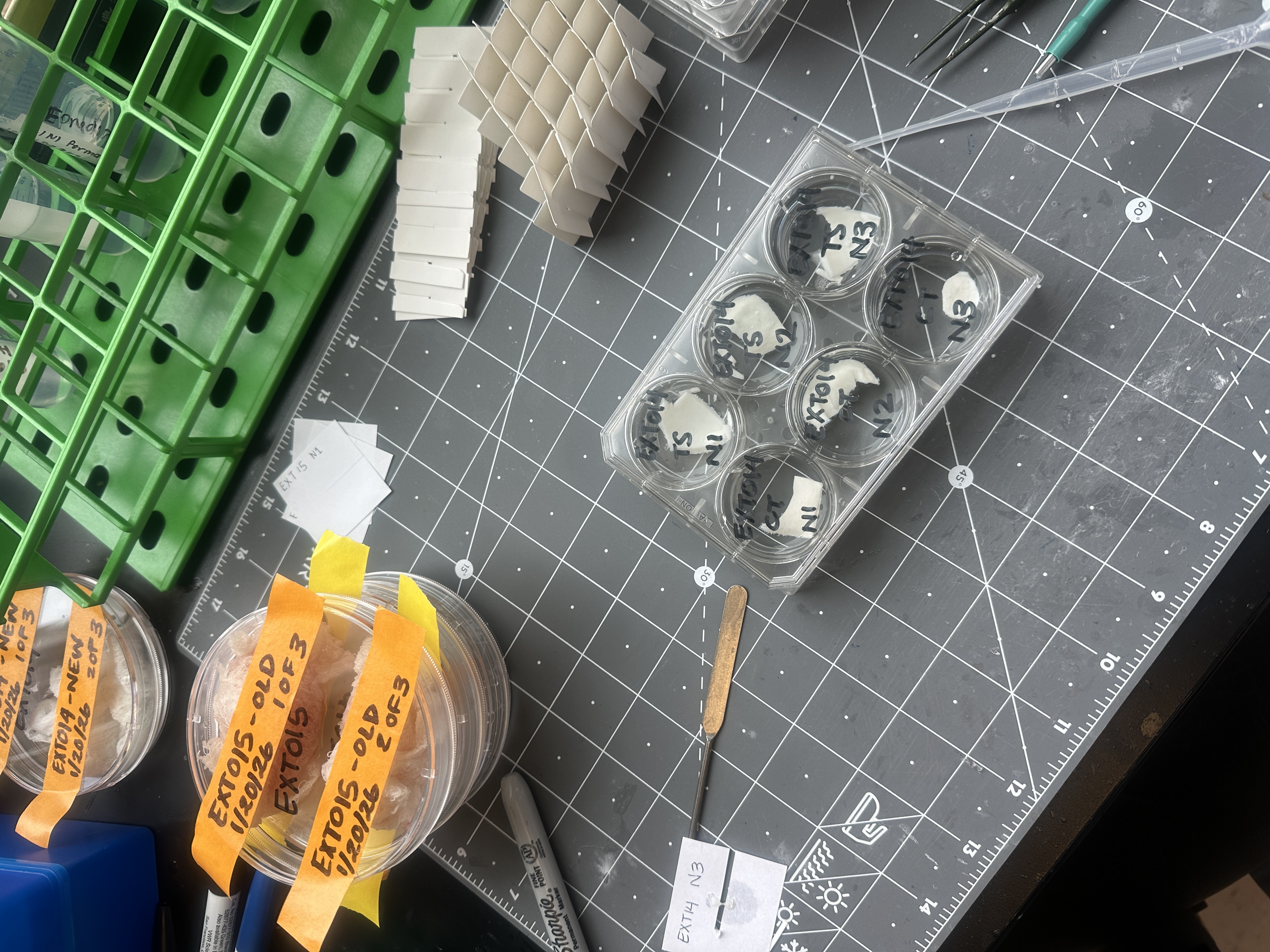
Extearna allograft material testing
The Problem

The Standard Surgery

Conventional autologous reconstruction requires harvesting rib cartilage. Surgeons must wait until ages 6-10 for full rib development, leaving children to grow up without an ear during the most socially formative years.

Extearna costal cartilage allograft
The Earicular Approach

Earlier surgery, simpler workflow

With our bioprinted construct, surgery can happen before full cartilage development. We size constructs to a near-adult shape using established growth proportions, then implant them early.

As the child grows, GelMA disintegrates and leaves behind cartilage similar to an autologous implant; surgeons no longer need to suture an ear pre-operation.

3D bioprinter G-code path planning for auricular construct
Comparative Analysis

How Extearna® stacks up

Hover any row to highlight it, or hover a column header to compare across all rows.

Feature MEDPOR Synthetic Graft Autologous Costal Cartilage Extearna®
Low risk of complications (infection, extrusion, rejection, fracture) -- Risks foreign body response -- Can lead to chest wall deformities ++ No foreign body response
Low risk of chest wall deformity ++ No rib harvest -- Requires rib harvest from patient ++ No rib harvest
Minimal pain and scarring + No separate donor site -- Muscle and cartilage operation + No separate donor site
Less surgically demanding + Requires TPF flap -- Requires two separate procedures + Requires TPF and framework
Short recovery time + Local healing -- Long monitoring period + Local healing
Reconstruction can be performed at an earlier age ++ No donor needed -- Sufficient cartilage at age 9-10 ++ Can implant as early as three years
Market Strategy

Cartilage Repair Market

The global cartilage repair market is expanding rapidly, with allograft-based solutions at the forefront of that growth.

💰
$5.98B
Current Global Market (2024)
📈
$7.65B
5-Year Market Projection
🚀
5.1%
CAGR 2025-2030
🌎
51.5%
North American Revenue Share

Market Overview

Market Size (Current) Market Size (Future) Market Trends Market Growth Rate Key Success Factors Main Competitors Main Competitor Key Patents
$5.98 billion

The global cartilage repair market was estimated at USD 5.98 billion in 2024. North American cartilage repair held the largest revenue share at 51.5% of the industry. Demand primarily from reconstructive and ENT surgeries.

$7.65 billion

(5-year projection)

The global cartilage repair market is expected to grow at a CAGR of 5.1% from 2025 to 2030. The market report shows both cell and non-cell based treatment modalities [5].

Cell-based modalities segment held the largest market share of 60.5% in 2024 and is expected to grow at the fastest rate.

Intrinsic repair stimulus segment held the largest market revenue share [5].

Predicting shift in allograft use due to shorter operating times and increased performance.

5.1% CAGR

(5-year projection, 2025-2030)

  • Surgeon adoption
  • Regulatory compliance
  • Tissue (cadaver) availability
  • Clinical evidence

~20.7%
Stryker Corporation

~27.1%
Zimmer Biomet

Stryker's MEDPOR® offers synthetic (porous polyethylene) ear implants for reconstructive surgery. Available disclosures focus on broader segments; product-category level not disclosed.

U.S. Patent No. 7655047
Craniofacial Implant

Polyethylene matrix and titanium mesh design for fibrovascular ingrowth. Assigned to Porex Surgical, Inc., acquired by Stryker. Referenced in product literature for MEDPOR TITAN [6].

Stakeholder Analysis

Stakeholder Current Commitment Desired Commitment Change Impact Description of Change & Impact Resistance Level Positive Factors Resistance Factors Tactics & Actions
Plastic surgeons / ENT surgeons Medium High High Surgical procedures will adapt to product; must adjust to material, composition, and structure to reduce patient morbidity Medium Lower patient readmission, morbidity (study [3] shows nearly no site morbidity with younger donors), long-term outcomes Graft integration surgical procedures, availability of product (cartilage from cadavers), can be harder to use than synthetics; study [1] claims higher aesthetic outcomes with PPE implants Provide clinical trial data, conduct demos
Hospital administrators Medium High Medium Reduction in surgery time, cost, and inventory management; fewer donor site complications; reduced cost of care Medium Lower patient readmissions; study [4] shows considerably less complication rates when compared to traditional IIHC grafts Budget approval cycles, high costs of allograft Cost and budget analyses, data showing success
Patients Medium High Medium Access to a less invasive reconstructive auricular graft with better integration. "Despite the higher costs, FFRG can provide a sufficient amount of tissue for grafting avoiding donor site complications and reducing the operative time" [1] Low Less invasive surgery, faster recovery times, better tissue integration, no autologous grafting, better aesthetic outcome Cost, lack of cadaver donor, less visibility. [2] claims that cost may be higher for FFRG grafts than autologous or IIHC Advertising, marketing, educational brochures, outreach with safety and regulatory compliance
Advisors, Mentors Medium High High Provides guidance and approves key decisions; must be updated regularly Low Interested in student success and seeing tangible outcomes Time limited; communication restricted due to busy schedules Weekly check-ins, progress reports, involvement in critical decisions, defined meetings
Meet the Team

The people behind Earicular

A UC Irvine BME senior design team blending research, clinical insight, and engineering execution.

LD

Lilian Doan

Team Lead, Research & Testing

B.S. BME

Plays guitar Favorite city: Carmel-by-the-Sea, CA
HN

Houston Nguyen

Research & Testing

B.S. BME

Self-taught pianist Master rank in League of Legends
SA

Seetah Mohammed S Abanumay

Clinical Research

B.S. BME

Shoots & develops 35mm film 500+ films on Letterboxd
JB

James Ciro Brinsko

Market Research & Communication

B.S. BME

Rebuilds Mazda rotary engines Retro hi-fi audio enthusiast
SF

Santino Faccio

Clinical Research

B.S. BME

Fluent in English & Mandarin Snowboards at Mammoth Lakes every winter
JN

Jovan Ng

Data Analyst

B.S. BME & B.S. CS

Traveled 4 continents, 15 countries, 30 states Favorite instrument: piano
Contact

Get in Touch

Interested in Earicular's research or want to collaborate? Reach out to the team.

✉ liliand2@uci.edu